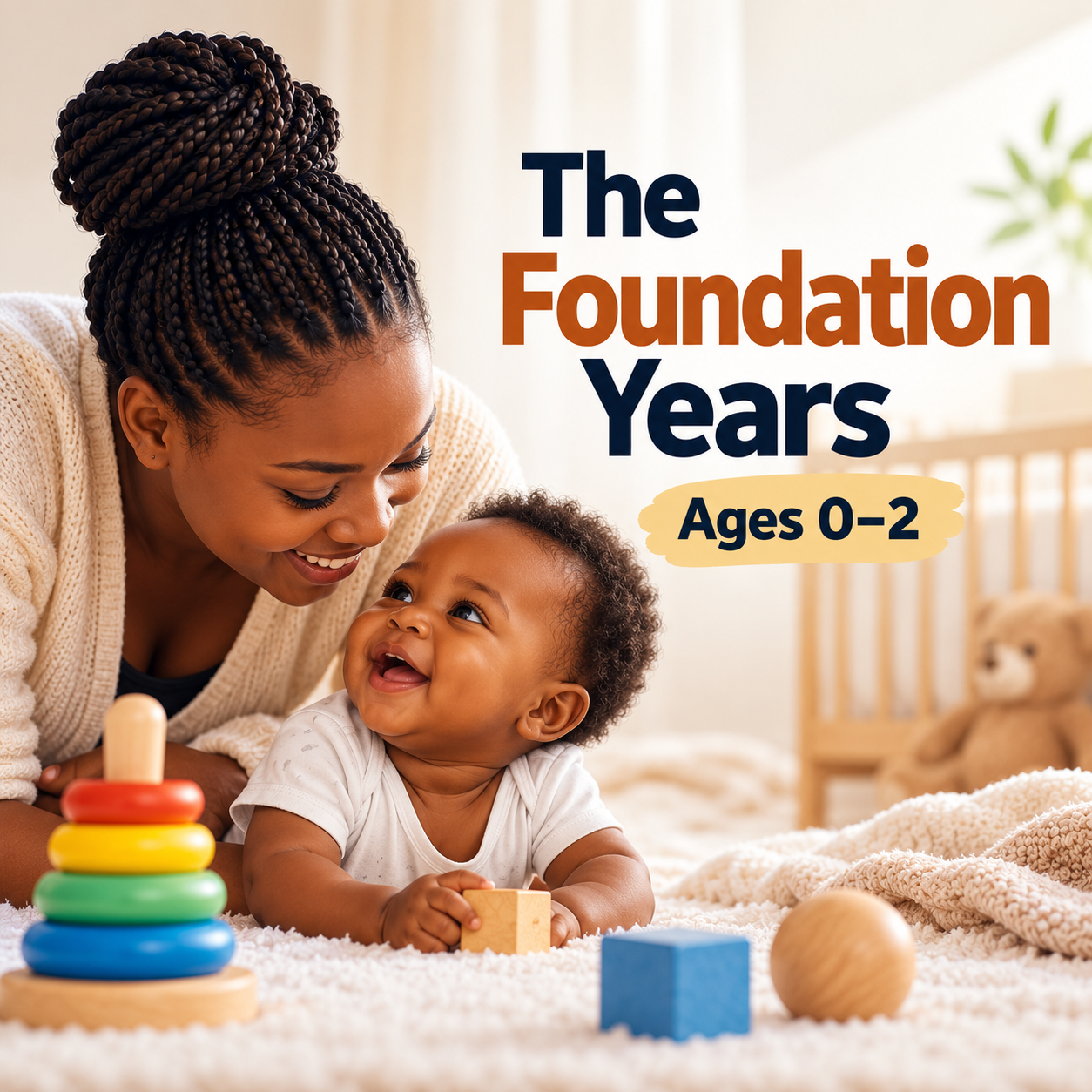
The Foundation Years: Ages 0–2

The first two years of a child’s life may look simple from the outside because so much of the day is taken up with feeding, sleeping, changing, crying, playing and learning to move. Yet these years are laying important foundations. Your child is beginning to learn whether the world feels safe, whether people can be trusted and whether their needs matter.

Building Safety and Trust

At this stage, children depend heavily on the adults caring for them. They cannot explain what they need, so they communicate through crying, movement, facial expressions and sound. When a parent responds with comfort, care and consistency, the child slowly begins to learn that they are not alone.

This is one of the earliest ways trust develops. The child begins to understand that when they are hungry, frightened, tired or uncomfortable, someone will respond.

Parents do not need to respond perfectly every time. What matters is that the child experiences care often enough to begin feeling secure.

Forming Healthy Attachment

Attachment is the emotional bond a child develops with the people who care for them. It grows through ordinary moments such as holding the baby, making eye contact, talking gently, smiling, comforting them when they cry and spending time close to them.

These actions may seem small, but they help the child feel secure. A child who feels secure is usually more confident to explore because they know there is a safe place and a trusted person to return to.

Learning Through the Senses

Babies and toddlers learn by touching, tasting, listening, looking, moving and experimenting. They want to shake things, throw things, crawl towards things, open cupboards and explore what is around them.

This can be tiring for parents, but much of it is normal learning.

The goal is not to stop curiosity, but to make the environment as safe as possible so the child can explore without unnecessary danger. Safe movement, simple toys, books, outdoor time and opportunities to interact with loving people all contribute to healthy development.

Language Begins Before Speech

Children begin learning language long before they can form clear sentences. Parents can help by talking throughout the day.

Simple comments such as, “We are putting on your shoes,” “Look at the bird,” or “Daddy is opening the door” help children connect words with what they see and experience.

Reading picture books, singing songs, repeating sounds and responding to babbling all help language to grow. Even when the child cannot answer clearly, they are listening and learning.

Beginning Spiritual Nurture Early

The early years are also a good time to begin spiritual nurture. A baby or toddler may not understand deep biblical teaching, but they can begin to experience faith as a natural part of family life.

Parents can pray over them, sing Christian songs, read simple Bible stories and use short phrases such as, “God made you,” “Jesus loves you,” and “Thank You, God, for our food.”

Deuteronomy 6:6–7 reminds parents that spiritual teaching often happens in the ordinary rhythms of life. Faith does not have to begin with formal lessons. It can begin with prayer, worship and simple conversations at home.

What Matters Most in These Years

During the foundation years, children need loving presence, safety, affection, consistency, conversation and freedom to explore. They also need parents who pray for them and create a home where God is part of everyday life.

These years are not about producing an impressive child. They are about establishing a strong foundation.

Psalm 127:3 reminds us that children are a heritage from the Lord. Caring for that heritage often looks very ordinary in the first two years. It is feeding the child again, picking them up when they cry, reading the same book, singing the same song and wiping the same little hands many times.

Yet these ordinary moments are building something important.

You are helping your child learn that they are loved, that relationships can be safe, that the world can be explored and that God is part of the life of the family. Much of what comes later will be built on what is quietly established now.

The Foundation Years: Ages 0–2

Discover the key developmental needs of children aged 0–2, including attachment, safety, trust, sensory learning, early language and spiritual nurture. Learn how parents can build a strong foundation through everyday care, connection and faith.

Read More

The Discovery Years: Ages 3–5

Discover the key developmental needs of children aged 3–5 during the Discovery Years. Learn how parents can nurture curiosity, independence, emotional growth, character, responsibility and early faith through simple everyday moments.

Read More

The Learning Years: Ages 6–8

Explore the key developmental needs of children aged 6–8 during the Learning Years. Learn how parents can build confidence, responsibility, healthy friendships, character, growing faith and a positive attitude towards learning.

Read More
The Identity-Building Years: Ages 9–12

Explore the key developmental needs of children aged 9–12 during the Identity-Building Years. Learn how parents can nurture confidence, wise friendships, growing independence, healthy body awareness, gifts, digital wisdom and a personal faith in God.

Read More

The Early Teen Years: Ages 13–15

Explore the key developmental needs of teens aged 13–15 during the Early Teen Years. Learn how parents can guide identity, emotions, friendships, body changes, digital life, decision-making, boundaries and a growing personal faith.

Read More

The Launch Preparation Years: Ages 16–18

Explore the key developmental needs of teens aged 16–18 during the Launch Preparation Years. Learn how parents can prepare them for adult responsibility, wise decisions, relationships, money, practical life skills and a faith that can stand on its own.

Read More

The Emerging Adult Years: Ages 19–21

Explore the key developmental needs of young adults aged 19–21 during the Emerging Adult Years. Learn how parents can advise and release with wisdom as their children take greater responsibility for money, work, relationships, decisions and personal faith.

Read More

The Establishing Years: Ages 22–25

Explore the key developmental needs of young adults aged 22–25 during the Establishing Years. Learn how parents can support career growth, financial responsibility, relationships, adult faith, healthy boundaries and increasing independence without taking over.

Read More

The Building Years: Ages 26–30

Explore the key developmental needs of adults aged 26–30 during the Building Years. Learn how parents can relate as adults while supporting career growth, financial maturity, marriage, family life, healthy boundaries, responsibility and lasting faith.

Read More

Subscribe to join me, let's journey together...

7 comments On The Foundation Years: Ages 0–2

Leave a reply:

Your email address will not be published.

This site uses Akismet to reduce spam. Learn how your comment data is processed.

×